
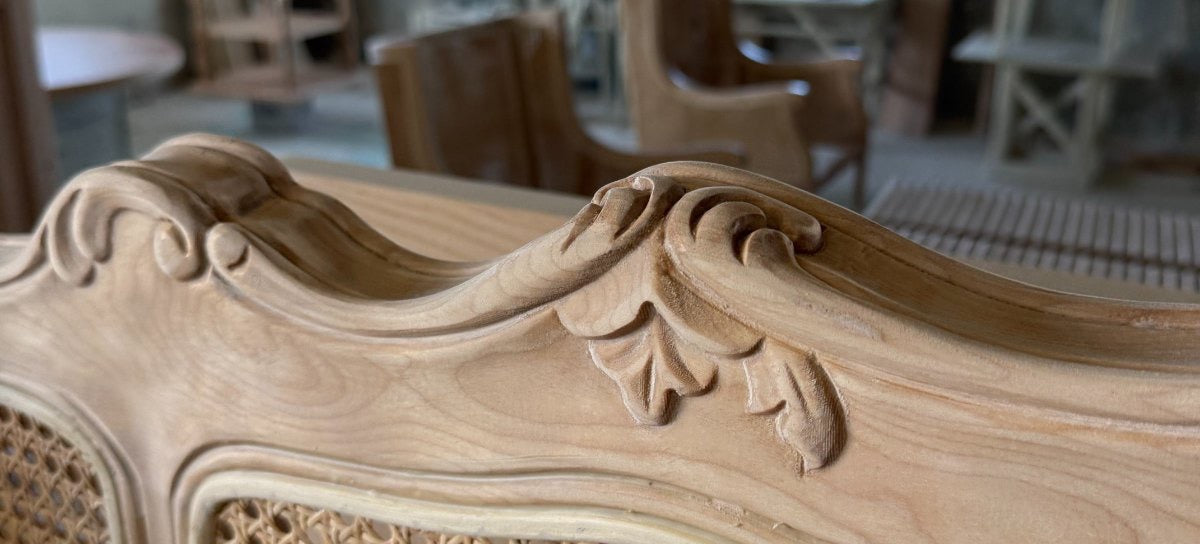
We went looking for a bed and found a lot of photographs.
In the winter of 2018 we wanted one specific thing: a French bedframe in pale wood with caned panels. Not rare, not adventurous — a shape that has been made continuously since about 1750 and appears in every second interiors book printed since.
We found hundreds of them. We could not find one that was real.
The carving was resin, cast in a mold and pinned onto a flat panel. Run a thumbnail across it and you find the seam. The cane was printed board held behind a lip — it cannot be re-tensioned, because there is nothing to tension. The frames underneath were particleboard wearing a photograph of birch, and several of them were being sold for the price of a decent second-hand car.
What struck us was not that the cheap ones were cheap. It was that the expensive ones were the same bed with a better photographer.
The thing we wanted had not become expensive. It had quietly stopped being made.
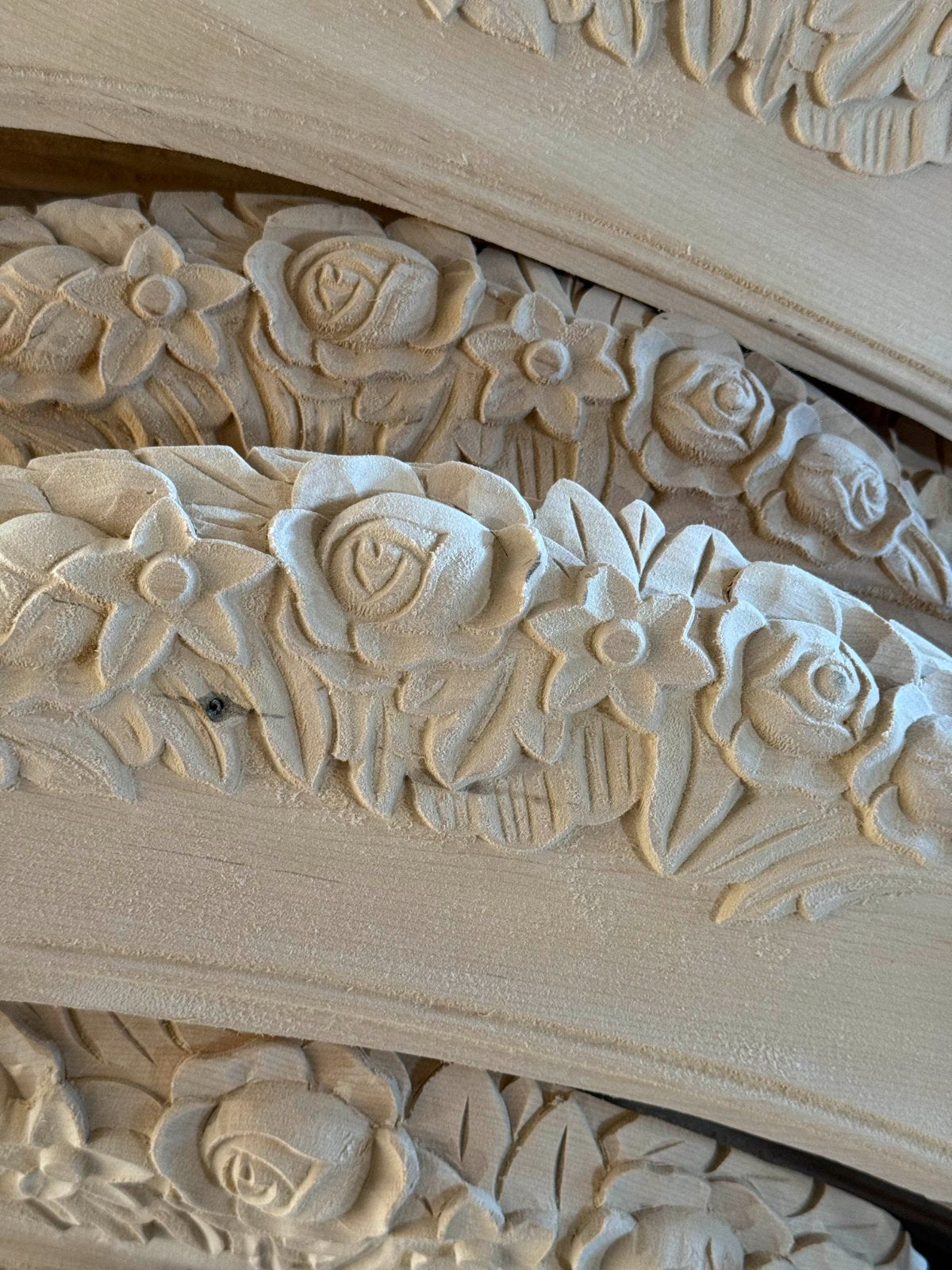
Then we had to find someone who still carved freehand.
Carving of this kind is not a lost art so much as an unemployed one. The machines that replaced it are very good at producing something that resembles a rose, and almost nobody is paying for the difference anymore.
We found him eventually — a carver in his sixties, working from drawings rather than templates, who had spent most of a career on restoration because there was no new work worth taking.
He was not enthusiastic. He asked what the deadline was. When we said we did not have one yet, he agreed to cut a single crest as a favor and see what we thought.
It took him nine days. We ordered four more the week we saw it.
“A rose takes the time a rose takes.” — asked, early on, whether eight weeks might be possible
Then we had to decide what not to build.
This is the part where a furniture company normally builds a range. A headboard-only version. A painted one. A smaller frame at a friendlier price, so there is something for everyone.
We ran the arithmetic on all of it and kept arriving at the same problem: every additional version is made by taking something out. And the moment a cheaper Meravelle exists, this one stops being the bed and becomes the upgrade.
So there are four sizes of the same frame and everything goes into all of them. Twelve weeks, four pairs of hands, no second tier. It is a worse business plan and a much better bed.
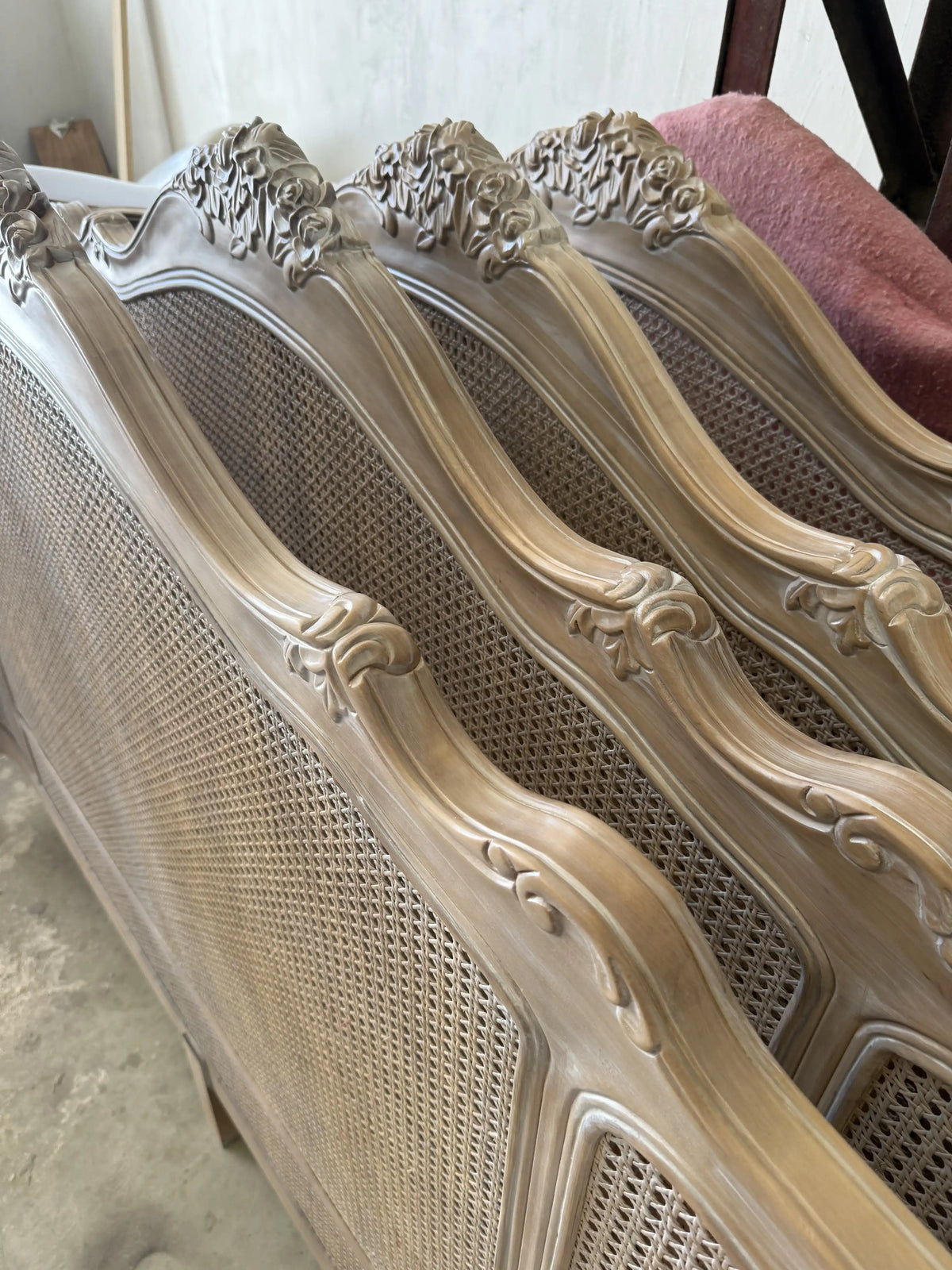
Four shortcuts we turned down.
Every one of these would have made the bed cheaper or faster. Together they are the reason it is neither.
Casting the carving
A resin crest costs a few dollars and takes minutes. It also has a seam you can find with a thumbnail, and it dates the whole frame the moment you notice it.
Printing the cane
Pressed board with a cane pattern photographs identically and cannot be re-tensioned, re-caned or repaired. It is a panel pretending to be a craft.
Shortening the cure
The limed finish needs to sit before it is sealed. Pulling that forward by two weeks is invisible on the day it arrives and obvious in five years.
Making a cheaper second version
The moment there is an entry-level Meravelle, this one becomes the upsell — and the cheap one becomes what we actually are.
Each of these is easier to hold to when there is no cheaper version in the catalog quietly asking to be protected.
Since 2019, and no shortcuts taken.
Eleven months looking for a caned French frame that was genuinely carved and genuinely caned. We did not find one at any price.
A carver agreed to cut a single crest as a favor. Nine days' work. We ordered four more the week we saw it.
Until then panels came from outside and half arrived slack. Bringing caning in-house is the single biggest reason the bed lasts.
Around forty frames a year — carved, caned, joined and finished by the same four people, in that order.
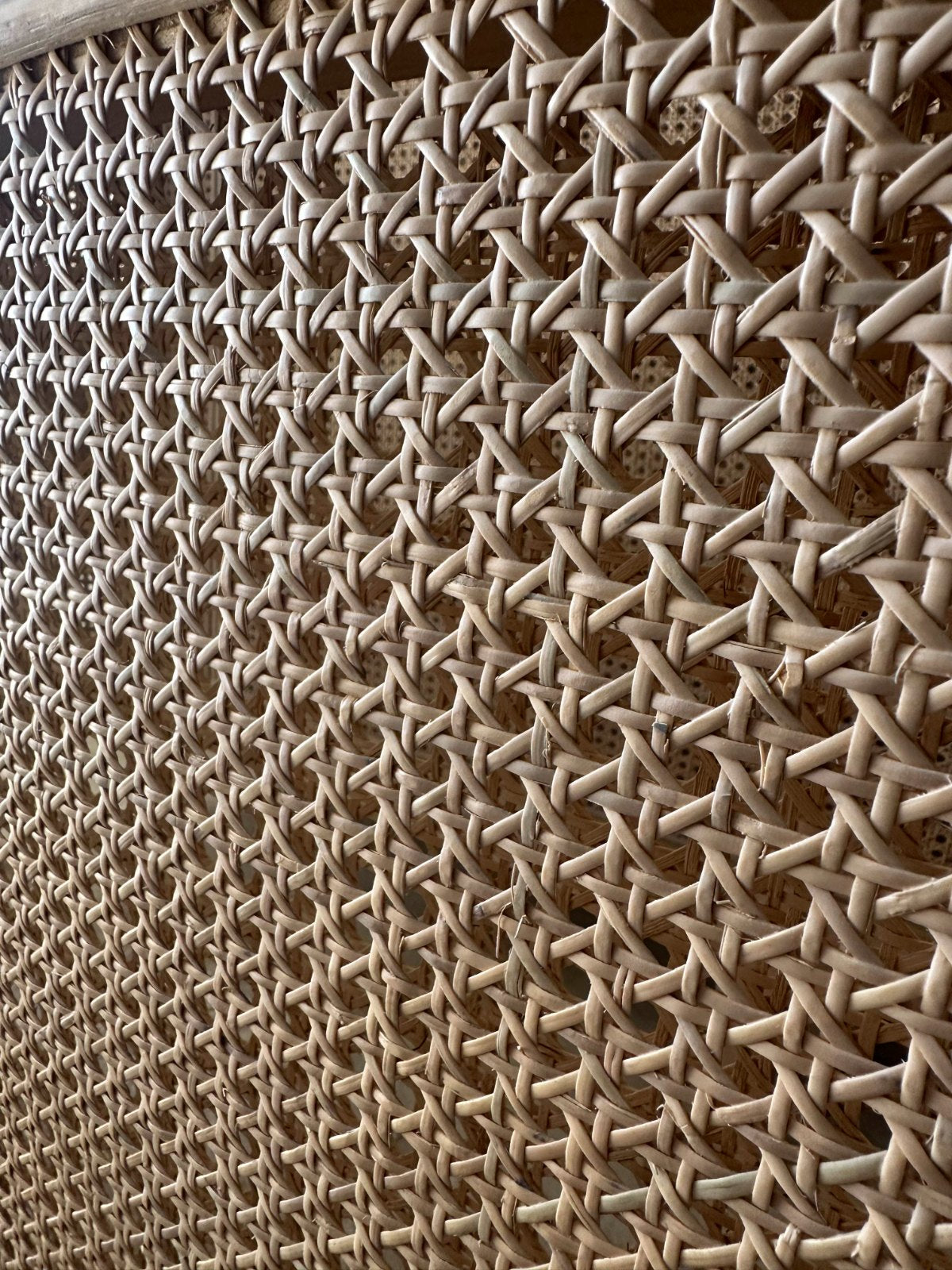
What twelve weeks actually buys you.
The honest answer is time, and almost nothing else. There is no exotic material in this bed. Birch is not rare. Rattan is not precious. You are not paying for scarcity.
You are paying for a person to sit with a gouge and cut a crest that no press could produce, for six panels to be woven strand over strand and seated into a groove cut for them, for corners to be blocked and bolted rather than stapled, and for a finish to be left alone long enough to cure properly.
Roughly forty of these leave the workshop a year. We would rather that number stayed where it is.
If you order one, you will hear from us while it is being made — at the carving, at the caning, at the finish. It is the part of this that most owners tell us they did not expect to enjoy.